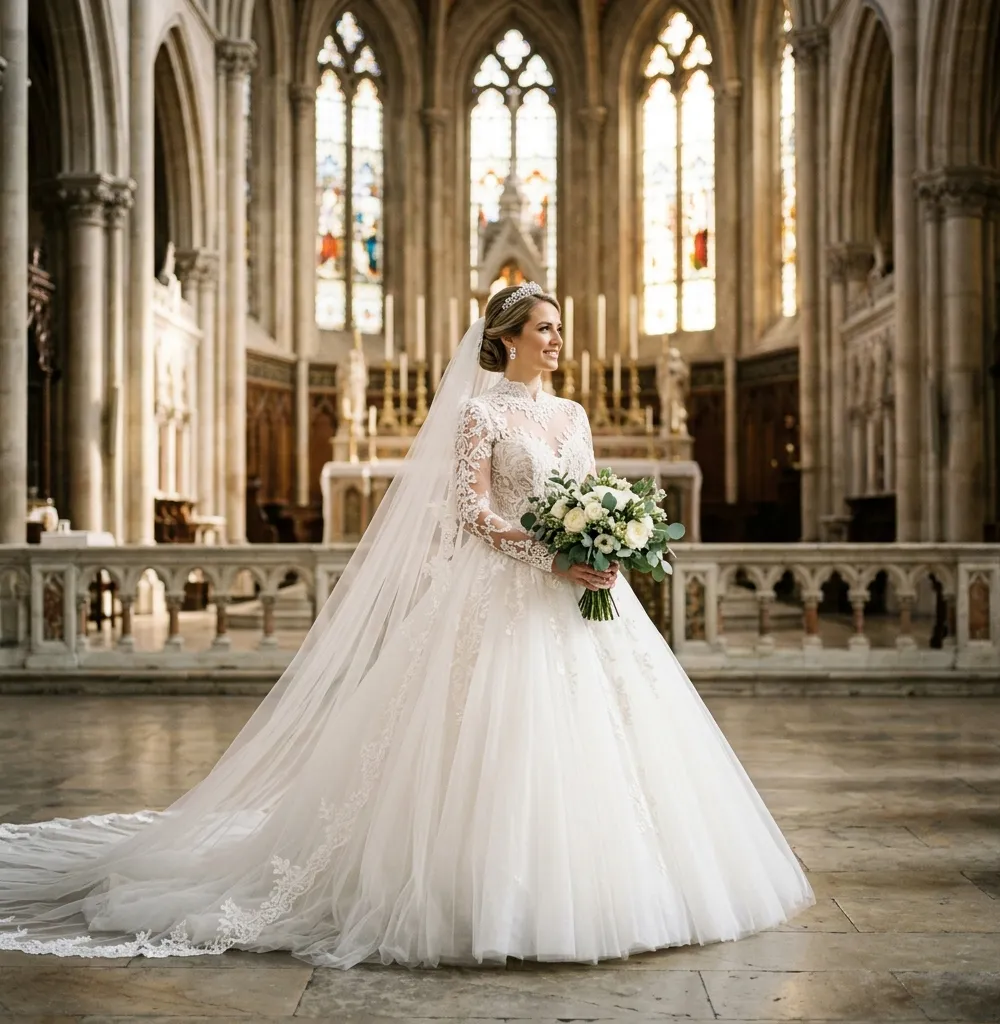
Elegant Wedding Dresses Every Bride Dreams of (2026)
From timeless cathedral-length ball gowns and sleek minimalist crepe silhouettes to romantic boho lace and regal princess styles — discover the most breathtaking wedding dresses of 2026 that every bride is pinning.
MyHomeDecor
A wedding dress is the most significant garment most women will ever wear — chosen once, remembered forever, and photographed from every angle imaginable. It’s the dress that sets the entire visual tone of a wedding day, that appears in every major photograph, and that generations later becomes the image people reach for when they want to understand who you were on that day.
Choosing it is one of the most personal decisions in fashion. And yet the process — which should feel like finding something that is unmistakably, completely you — too often becomes overwhelming: an avalanche of silhouettes, fabrics, price points, and opinions from everyone who has one.
This guide simplifies it. Here are the wedding dress aesthetics, silhouettes, and styling approaches that are defining bridal fashion in 2026 — and how to find the one that belongs to you.
The 2026 Bridal Fashion Moment
Wedding dress trends move more slowly than fashion trends — a bride wants her dress to feel timeless in photographs taken in 20 years, not recognisably dated to 2026. But there are genuine directional shifts happening in bridal fashion right now that are worth understanding.
The defining qualities of 2026 bridal fashion:
- Quiet luxury over maximalism: The Succession-era aesthetic has reached bridal. Clean lines, exceptional fabric quality, and architectural precision are commanding far more attention than heavy embellishment and theatrical drama.
- The return of the sleeve: After years of strapless dominance, sleeves are firmly back — long lace sleeves, puff sleeves, cape sleeves, and architectural structured shoulders all feature prominently in 2026 collections.
- Sculptural simplicity: Dresses with a single, extraordinary design moment — an architectural back, a dramatically draped bodice, an asymmetric neckline — rather than decoration spread across every surface.
- Coloured bridal: While white and ivory remain dominant, blush, champagne, soft sage, and even dusty blue have genuine presence in 2026 bridal collections for the bride who wants to diverge from convention.
The Classic Ball Gown — Timeless Royalty
The ball gown is wedding fashion’s most enduring silhouette — and for very good reason. It is, when executed well, the most dramatic and photographically stunning dress available.
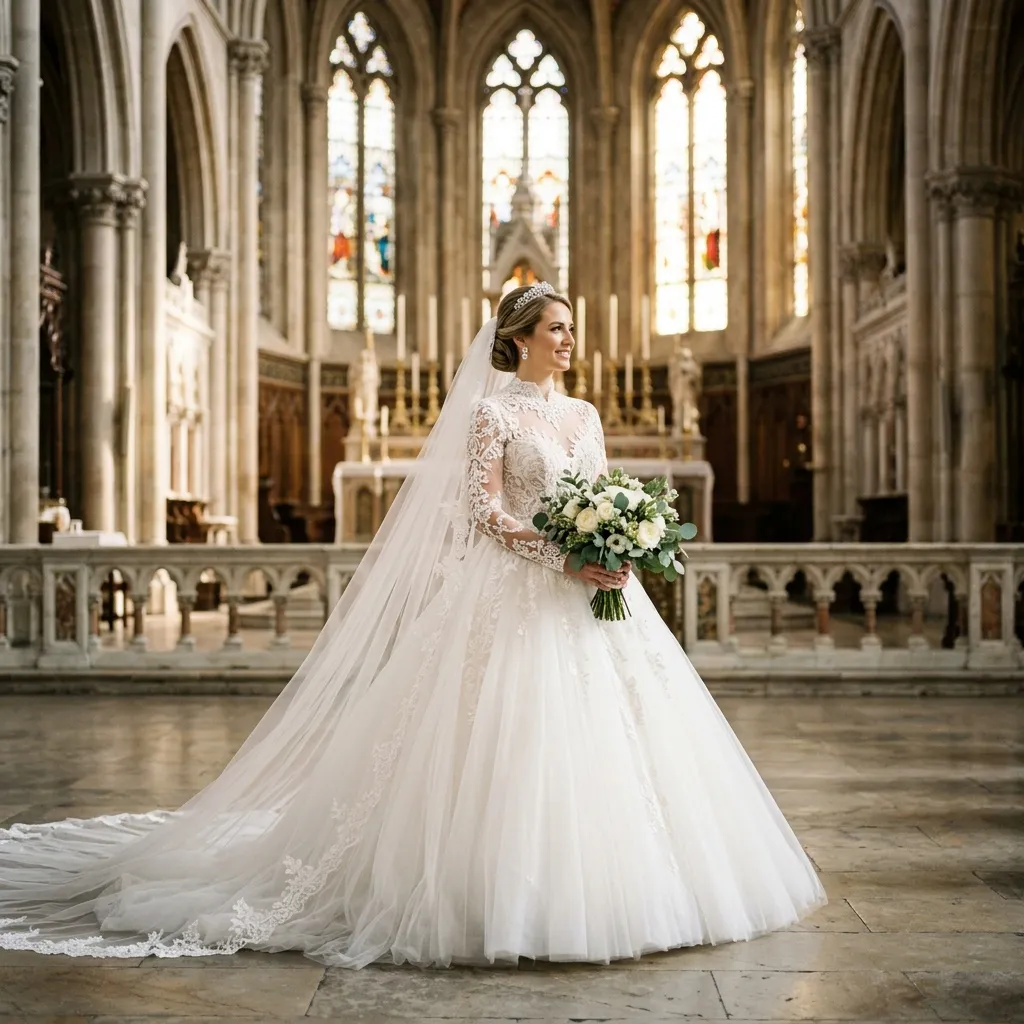
What defines the 2026 ball gown:
- A fitted, structured bodice — typically strapless sweetheart, off-shoulder, or high-neck with architectural detail
- A dramatically full skirt — layered tulle, duchess satin, or a combination
- A cathedral-length train that pools behind, creating the long, trailing silhouette that is quintessentially bridal
- A cathedral-length veil that matches or exceeds the train length
The styling principle: Ball gowns carry their own drama — the dress is the statement. Hair and accessories should complement rather than compete. A sleek updo, simple diamond studs, and a clean-edged cathedral veil creates perfect harmony with the dress’s scale.
Who it suits best: Ball gowns are the great equaliser of wedding fashion — the generous skirt volume creates a proportioned silhouette for every body shape. The fitted bodice celebrates the waist and upper body while the skirt flows away, creating an hourglass impression from every angle.
Venues it speaks to: Grand churches and cathedrals, stately homes, historic ballrooms, luxury hotel venues. The ball gown feels exactly right in spaces with high ceilings, chandeliers, and architectural grandeur.
The Minimalist Dress — Modern Bridal Perfection
The minimalist wedding dress has become the defining aesthetic of discerning contemporary brides. Stripped of embellishment, these dresses rely entirely on the quality of the fabric, the precision of the cut, and the refinement of a single design element to create their impact.
The fabric is everything: Without embellishment to carry visual interest, minimalist dresses live or die by their fabric. The most exquisite minimalist gowns are made from:
- Silk crepe: The weightiest and most beautifully draping of bridal fabrics; the way it moves is itself the design
- Bias-cut satin: Creates a liquid, body-grazing silhouette; particularly elegant in movement
- Heavy mikado: Structured without stiffness; holds an architectural shape with extraordinary precision
- Silk organza: Gossamer-light, creates movement; particularly beautiful in soft breeze photography
The defining 2026 minimalist details:
- The cowl neck: A deep, draped neckline that creates elegant feminine volume without fuss
- The open back: A low, clean-cut back — the dress’s single dramatic reveal
- The column silhouette: Long, streamlined, uninterrupted from shoulder to floor; the most sophisticated bridal line
- The sculptural neckline: An asymmetric or architectural neckline in contrast to a completely plain body
How to accessorise: Minimalist dresses are transformed by exceptional jewellery. One dramatic piece — an ornate chandelier earring, an architectural cuff, a statement necklace — reads as intentional and powerful alongside a simple dress.
The Romantic Boho Dress — Free-Spirited Elegance
The bohemian wedding dress captures a specific mood that no other silhouette can replicate: effortless, romantic, as if the bride simply arrived at the altar having been adorned by the natural world rather than a bridal boutique.
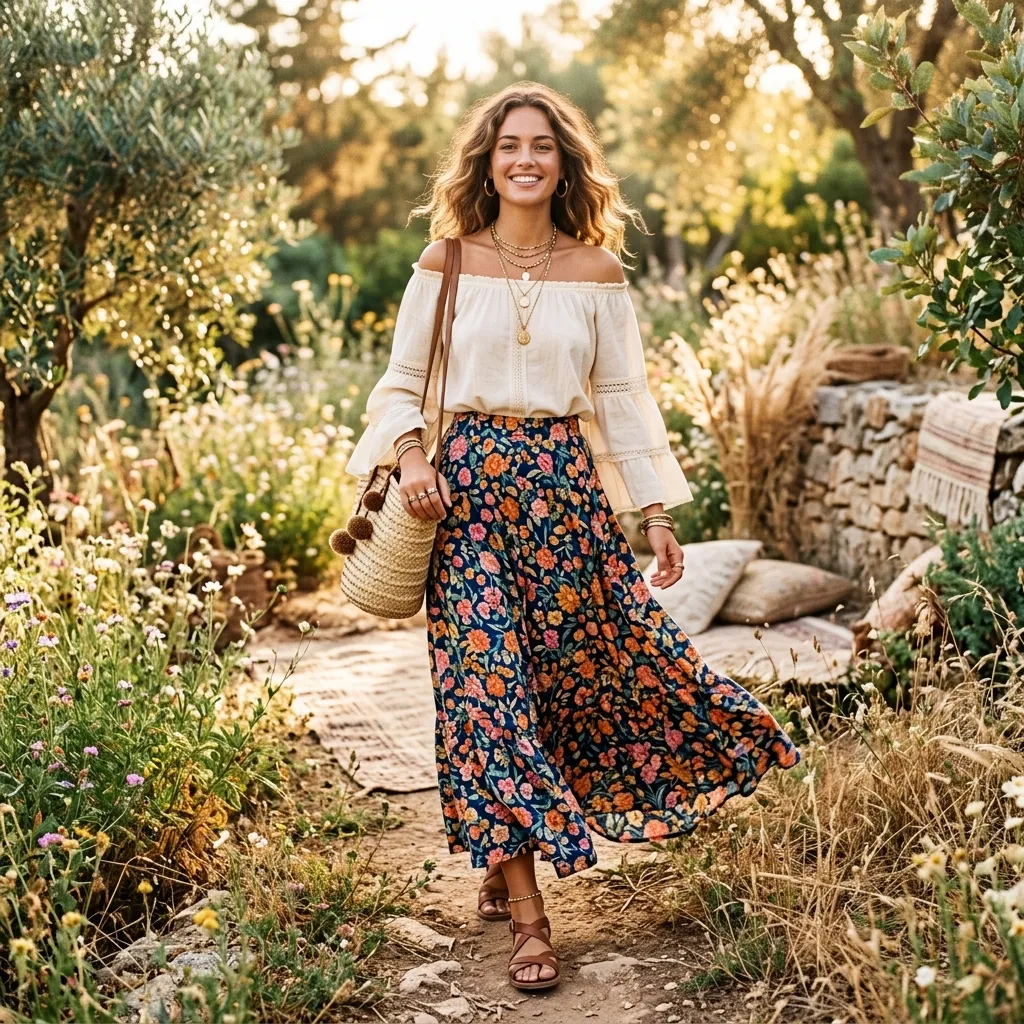
The elements of a perfect boho dress:
Lace: Not the structured, formal lace of traditional bridal, but softer, more irregular lace — Venetian, Chantilly, or embroidered floral — that feels organic and artisanal rather than engineered. Lace sleeves and lace-panelled bodices are the most common applications.
Chiffon and georgette layers: The fabrics that create the flowing, almost weightless movement characteristic of boho bridal. A multi-layered chiffon skirt, particularly when cut slightly unevenly at the hem, creates a beautifully free, organic silhouette.
The silhouettes that work: The boho aesthetic isn’t locked to a single silhouette. A-line, empire waist, and modified mermaid all work — what defines them as boho is the fabric choice, lace application, and styling rather than the shape itself.
Styling the boho bride:
- Hair: Loose and natural — a low bun with face-framing tendrils, or long beachy waves. Braiding is particularly beautiful in boho styling.
- Crown: A dried floral crown or fresh flower crown is the quintessential boho bridal accessory, and is worth including even if you simplify everything else
- Shoes: Strappy sandals, lace-up gladiators, or — the more adventurous choice — bare feet for outdoor ceremonies
- Bouquet: A loosely gathered, organic bouquet of wildflowers, pampas grass, and dried botanicals rather than a formal rounded bouquet
Venues that sing with boho bridal: Barn venues, vineyard weddings, outdoor garden ceremonies, woodland or meadow elopements, beach weddings. The boho dress needs natural light and organic surroundings to fully come alive.
The Princess Ball Gown — Pure Fairytale
If the classic ball gown is drama, the princess ball gown is pure fairytale — a silhouette that references a collective cultural memory of what a bride should look like. It is the most overtly romantic choice available, and in the right setting, it is utterly breathtaking.
What distinguishes the princess gown:
- An even fuller, more voluminous skirt than the classic ball gown — often with multiple layers of crinoline or net underskirts for maximum volume
- A structured, often heavily embellished bodice — beading, crystals, intricate lace appliqué
- A tiara or crown as the natural accessory (the one bridal styling moment where a tiara feels entirely correct)
- Opera-length gloves as an optional addition that completes the fairytale register
The embellishment landscape: Princess gowns are where embellishment lives most naturally in 2026 bridal. Beaded bodices with intricate crystal and pearl work, hand-applied 3D floral appliqués, silver or gold thread embroidery, and diamanté encrustation all appear in 2026 collections — done with restraint on the skirt, allowing the bodice to remain the focal point.
The modern princess approach: The contemporary princess gown avoids the dated quality that once characterised this silhouette by editing the embellishment — elaborate on the bodice, clean on the skirt — and choosing fabrics with natural weight and sheen rather than synthetic volume.
How to style it: The princess gown demands commitment. Full cathedral veil, tiara (or a floral arrangement in an updo), diamond or pearl jewellery, and the most formal shoes available. Half-measures undermine the dress’s grandeur. Go fully into the fairytale or choose a different silhouette.
Bridal Accessories — The Finishing Details
The accessories complete the vision. A stunning dress that is styled incorrectly loses some of its power; a simpler dress styled with extraordinary accessories becomes something genuinely memorable.
The Veil
The veil is the most transformative bridal accessory available — and the one most brides are most uncertain about. The principles:
Length matters more than style:
- Elbow-length (75cm): Casual, modern, works with shorter dresses and informal settings
- Fingertip-length (100cm): The most versatile length; works with most dress silhouettes and venues
- Chapel-length (150cm): Elegant, dramatic, requires more careful management
- Cathedral-length (300cm+): The most formal option; creates the trailing, grand entrance effect
The veil with the dress: As a general rule, match the veil’s formality to the dress. A minimalist crepe dress is overwhelmed by a cathedral veil with heavy lace trimming; a ball gown with lace bodice is undersold by a short elbow-length veil.
Jewellery
The one-statement rule: Choose one area of the face/neck/ear for your statement piece, and keep the other two simple. Statement earrings with a simple or no necklace. A statement necklace with simple stud earrings. This reads as deliberate and powerful.
The 2026 jewellery direction: Pearl jewellery — particularly baroque and freshwater pearls — has made a major return in bridal. Pearl drop earrings, pearl-strung headbands, and layered pearl necklaces all appear throughout 2026 collections as an alternative to diamond-focused styling.
The Shoes
Bridal shoes serve the dress, not the other way around. The principles:
- For ball gowns: A pointed or peep-toe court heel in satin adds the right finish; the shoe is rarely visible, so comfort matters more than impact
- For minimalist dresses: The shoe becomes visible — choose something with genuine design interest, whether a sculptural heel, a bow detail, or an interesting strap configuration
- For boho dresses: Sandals, strappy flats, or — the most beautiful option — embroidered or beaded mules
How to Find Your Dress
The process matters as much as the dress itself.
Start with silhouette, not style: Before considering lace vs. crepe, strapless vs. sleeve, visit at least one dress in each major silhouette — ball gown, A-line, column, mermaid — to understand which proportion works best for your body and which feels most authentically you.
Book appointments with intention: Most bridal boutiques work by appointment only. Research which boutiques carry designers aligned with your aesthetic before booking — visiting a boutique whose aesthetic is maximalist beading when you know you want minimal crepe wastes everyone’s time.
Bring the right people: The ideal wedding dress appointment group is small (2–3 people maximum), consists of people who understand your personal style rather than impose their own, and prioritises your opinion above all others.
Trust the feeling, not the look: Every experienced bridal consultant will tell you the same thing — the dress you think you want in theory is often not the dress you feel most yourself in on the day. The feeling when you put on the right dress — a sense of completeness rather than just looking good — is worth trusting over any external opinion.
The Dress Is the Beginning
A wedding dress doesn’t exist in isolation. It’s the beginning of a visual vision — everything else in the wedding’s aesthetic should flow from or work alongside it. Once you have your dress, the flowers, the venue’s light, the bridesmaids’ palette, and the table styling all find their natural direction.
Choose slowly. Try with an open mind. And when you find the one that makes the room go quiet — that’s the one.
Save this guide to your wedding Pinterest board and return to it when you begin your search.
Share this article