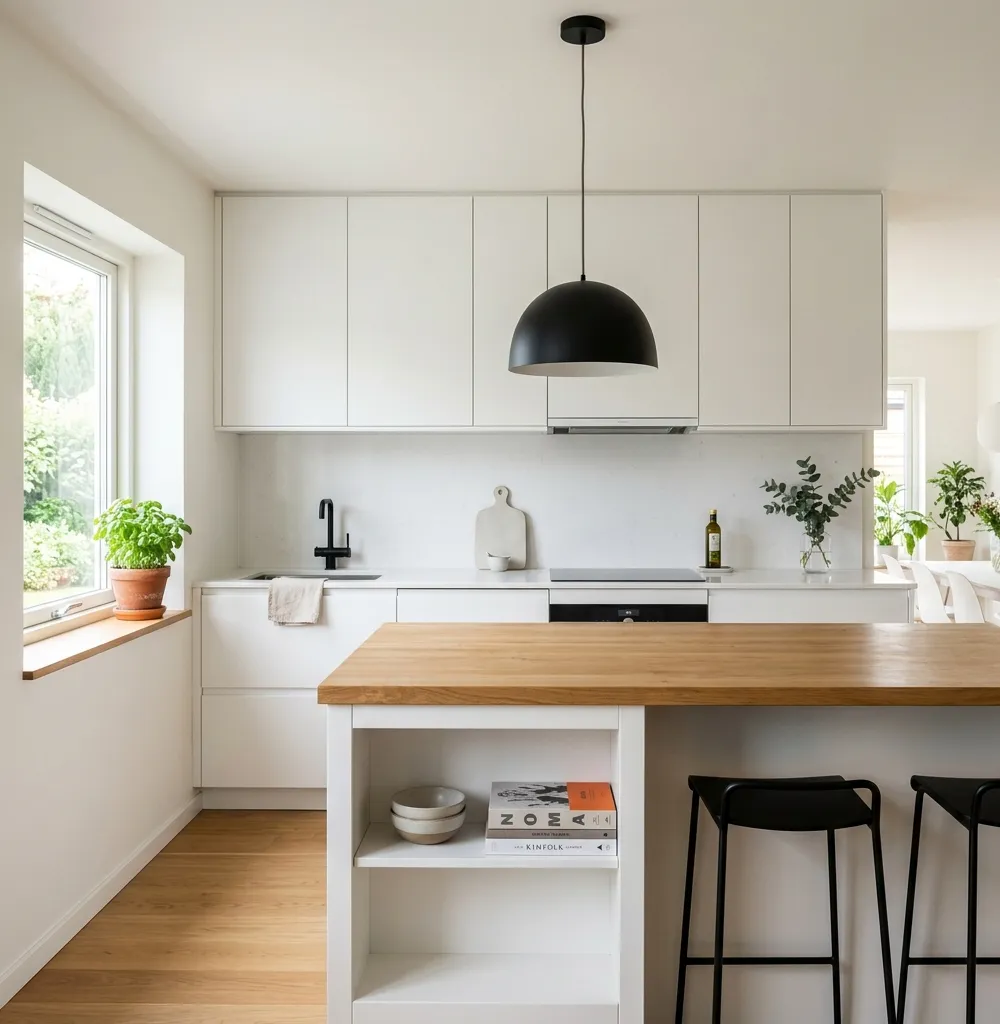
Minimalist Kitchen Design: Less is More
Explore the beauty of minimalist kitchen design — clean lines, functional storage, and a clutter-free aesthetic that makes cooking a genuine joy every single day.
MyHomeDecor
Walk into a truly minimalist kitchen and you feel it immediately — a quiet sense of calm that most rooms in most homes never achieve. No visual noise, no piles of accumulated objects, no appliances competing for counter space. Just clean lines, warm materials, and the elegant promise of function without friction.
The minimalist kitchen is not a style choice born of austerity — it’s a design philosophy rooted in the idea that what you remove matters as much as what you add. Every object earns its place. Every drawer has a purpose. Every surface tells you something intentional about the people who cooked here.
This guide will walk you through everything you need to know to design, renovate, or simply reorganize your existing kitchen into a space that embodies that calm, purposeful simplicity.
The Core Principles of Minimalist Kitchen Design
Before diving into specific elements, it helps to understand the foundational principles that define this aesthetic. Minimalism in kitchens isn’t about having nothing — it’s about having only the right things, in the right places, in the right quantities.
1. Clear Surfaces as a Non-Negotiable
The single most defining characteristic of a minimalist kitchen is the countertop: clear, wiped clean, holding only what is used every single day. A coffee maker if you make coffee daily. A knife block if you cook regularly. Nothing else.
Everything else — the toaster, the blender, the air fryer, the bread box — lives in a cabinet. This isn’t inconvenient once you’re used to it; it’s liberating. A clear counter makes food prep faster (no moving things around), easier to clean (wipe the whole surface in one pass), and far more beautiful.
The habit to develop: at the end of every cooking session, return every single object to its home. Do this consistently for two weeks and it becomes automatic.
2. A Restrained, Warm Color Palette
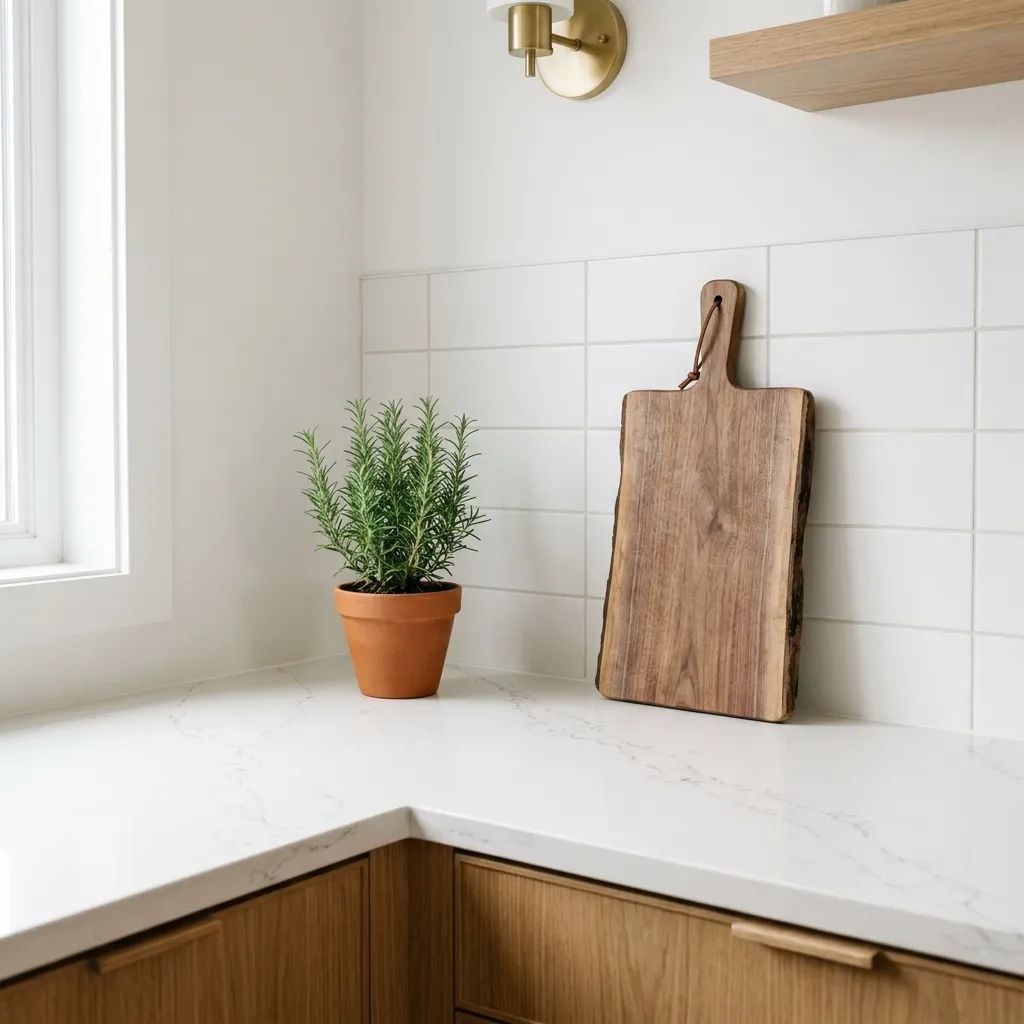
The minimalist kitchen palette is narrow — but it doesn’t have to be cold. The best minimalist kitchens balance visual restraint with genuine warmth:
- Warm white or soft cream for cabinetry — not bright white, which can feel clinical
- Natural wood for the island, open shelves, or lower cabinets — adds organic warmth that pure white cannot
- Warm stone or matte quartz for counters — veined marble or honed limestone over glossy polished surfaces
- Matte black used sparingly for hardware, faucets, and one or two pendant fixtures
- Concrete or stone grey for a more industrial edge if you prefer cooler tones
The key: choose two or three materials and use them consistently throughout the kitchen. Visual consistency is what creates the sense of calm that defines minimalist spaces.
3. Quality Over Quantity — in Everything
The minimalist kitchen is defined by fewer, better objects. One exceptional chef’s knife and one good paring knife beat a block of twelve mediocre ones. A single well-seasoned cast-iron skillet can do the work of multiple non-stick pans. Beautiful, durable ceramic bowls in matching sizes replace a mismatched collection.
This principle applies to appliances, utensils, gadgets, and storage containers. Each time you’re tempted to add something new, ask: does this replace something, or does it add to the collection? Ideally, new things should replace old things.
Storage: The Secret Weapon
Minimalist kitchens don’t have less stuff — they have more intentional storage. The visual calm comes from objects being hidden away in well-organised systems, not from having fewer things than other kitchens.
Handle-less Cabinets
Push-to-open or integrated pull cabinets create an unbroken wall of storage with no visual interruption. The lack of hardware removes one of the most visually busy elements from a typical kitchen. Modern cabinet hardware has become excellent — soft-close push mechanisms work reliably and feel satisfying.
If push-to-open isn’t in your budget, recessed J-pull handles (a thin groove routed into the door) achieve a similar visual cleanliness at a fraction of the cost.
The Pull-Out Pantry System
A floor-to-ceiling pull-out pantry — essentially a narrow column of shelves that slides entirely out of a cabinet — is one of the most transformative storage solutions for a minimalist kitchen. Everything is visible and accessible; nothing gets buried at the back of a deep cabinet.
Decant dry goods (rice, pasta, lentils, cereals) into matching glass or clear container sets with labels. This seems fussy until you’ve done it, at which point it becomes one of those things you can’t imagine living without. Everything is visible at a glance, quantities are easy to monitor, and the kitchen feels more like a curated pantry than a cluttered supermarket.
Open Shelving — Done with Discipline
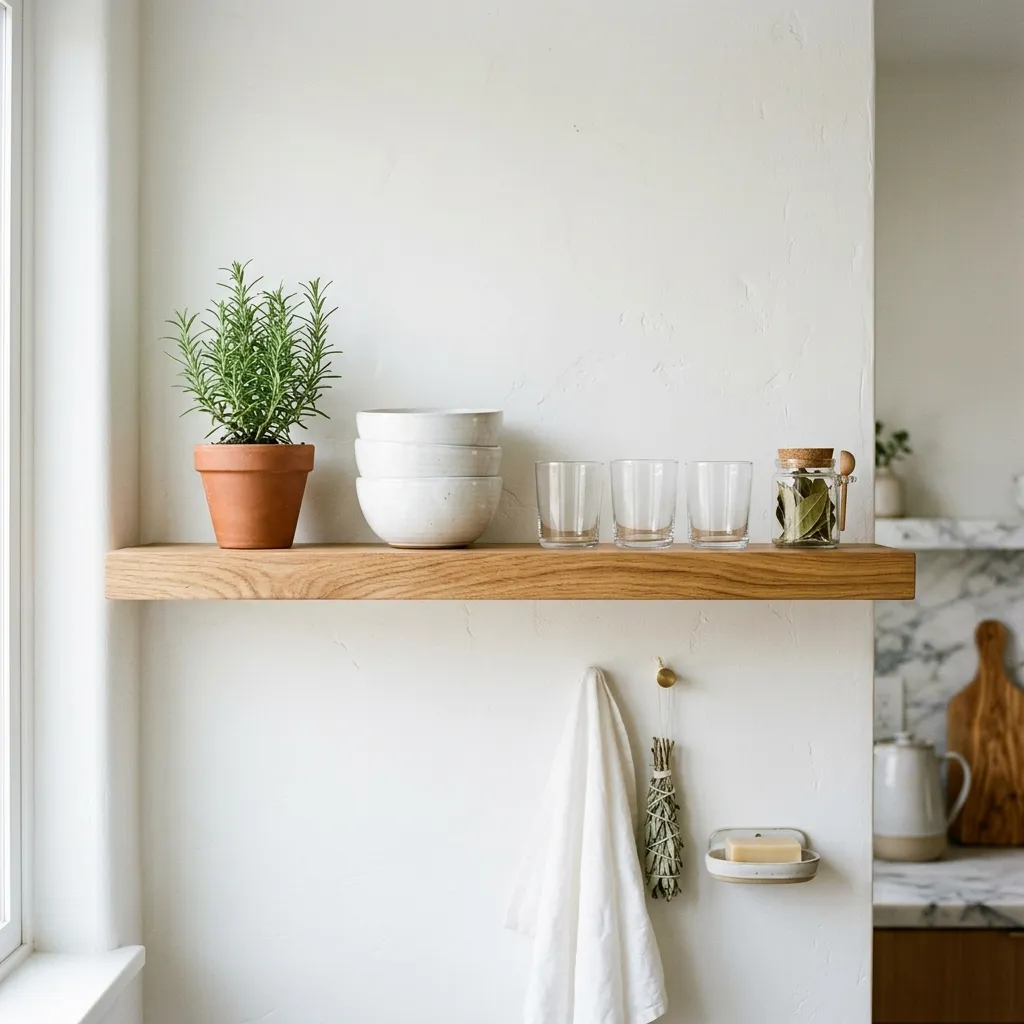
Open shelving is beautiful in minimalist kitchens — but only when edited to within an inch of its life. The rules are strict:
- Only matching or cohesive pieces: one set of white ceramics, one set of simple glassware, not a mix of everything you own
- Odd-number groupings: three things read as intentional; two reads as forgotten; four reads as cluttered
- 30% negative space minimum: empty shelf space is a design element, not wasted storage
- One plant or organic element: a small potted herb or trailing succulent adds life without chaos
- No mismatched items: if something doesn’t belong visually, it lives in a cabinet
If you can’t commit to this level of curation, closed cabinets are a better choice for you. There is no shame in this — and closed cabinets are actually more authentically minimalist.
Lighting in the Minimalist Kitchen
Minimalist kitchens rely on considered, layered lighting rather than a single overhead source doing all the work.
The three layers you need:
- Ambient: Recessed ceiling lights (LED, 2700K warm white) on a dimmer switch provide even, adjustable base illumination without visual clutter
- Task: Under-cabinet LED strip lights illuminate the countertop directly where you prep and cook — these are also remarkably affordable and easy to install yourself
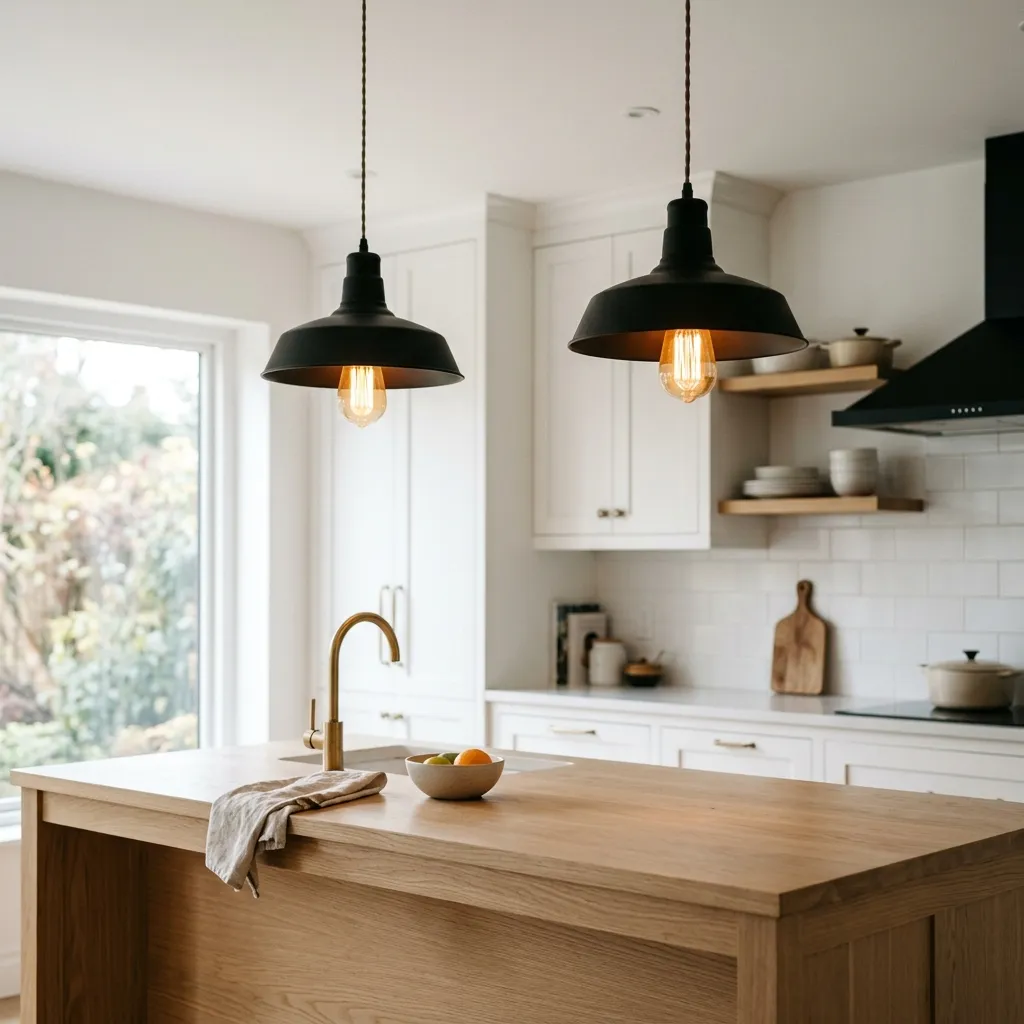
- Focal: A single pendant light (or two if you have a long island) creates a visual anchor and adds personality without breaking the clean aesthetic
For pendant selection in a minimalist kitchen: matte black with a simple geometric shade, or a natural rattan sphere. One pendant, done well, is worth five mediocre ones scattered around the ceiling.
The Backsplash
The backsplash is where many people break the minimalist spell — and it’s understandable, because the options are endless and the temptation toward pattern is real. Resist it.
Best backsplash choices for minimalist kitchens:
- Large-format tiles (600×300mm or larger) with thin grout lines in matching or near-matching grout color — the eye reads this as almost a solid surface
- Full-slab stone or quartz running from counter to upper cabinet — the most premium-looking option, genuinely seamless
- Matte white subway tile in stack bond (tiles aligned directly above each other, not offset) — cleaner and more contemporary than the traditional brick offset
What to avoid: mosaic tiles, busy patterns, high-contrast grout, anything that competes with the cabinetry for visual attention.
The Kitchen Tools Worth Keeping
Part of minimalist kitchen design is editing your equipment ruthlessly. Here’s a condensed guide to what’s genuinely worth keeping:
Essential cookware:
- One 10-12“ cast-iron or stainless skillet
- One 3-4 quart saucepan
- One large stockpot / Dutch oven
- One non-stick pan for eggs only
Essential knives:
- One 8“ chef’s knife (buy the best you can afford)
- One paring knife
- One bread knife
Everything else: ask honestly whether you used it in the last three months. If not, donate it. The kitchen gadget graveyard — the spiral cutter, the special avocado slicer, the third whisk — lives in every non-minimalist kitchen. Clear it out and you’ll wonder how you ever found anything before.
Living the Minimalist Kitchen Life
The minimalist kitchen is less a renovation project and more an ongoing practice. The physical design creates the conditions for order, but the habits sustain it.
The daily habits of a minimalist kitchen:
- One in, one out: every new purchase displaces something that leaves the kitchen
- Clear the counter before bed: the kitchen you wake up to sets the tone for the morning
- Weekly 10-minute audit: return anything that has migrated to a surface where it doesn’t belong
- Seasonal purge: every three months, open every cabinet and ask honestly what hasn’t been used
The reward: a kitchen that feels spacious regardless of its actual size, that is effortless to clean, that makes cooking feel like a pleasure rather than a chore, and that photographs beautifully every single time.
Starting Points (If You Can’t Renovate)
You don’t need a full kitchen renovation to move toward minimalist principles. Here are high-impact starting points for any budget:
| Change | Approximate Cost | Impact |
|---|---|---|
| Clear all counters + drawer organisation | $0 | Immediate and dramatic |
| Matching food storage containers | $25–60 | Visual clarity in pantry + fridge |
| Under-cabinet LED strips | $30–80 | Game-changing task lighting |
| New cabinet hardware (simple bar pulls) | $40–100 | Updates the entire look of cabinetry |
| Simple pendant light replacement | $60–200 | Strongest single aesthetic upgrade |
| Peel-and-stick backsplash tile | $50–150 | Full backsplash transformation |
Start with clearing the counters. It costs nothing and its impact is immediate. Everything else builds from there.
Ready to transform your kitchen into a calm, beautiful, functional space? Pin this to your kitchen inspiration board and revisit when you’re ready to plan your next move.
Share this article